
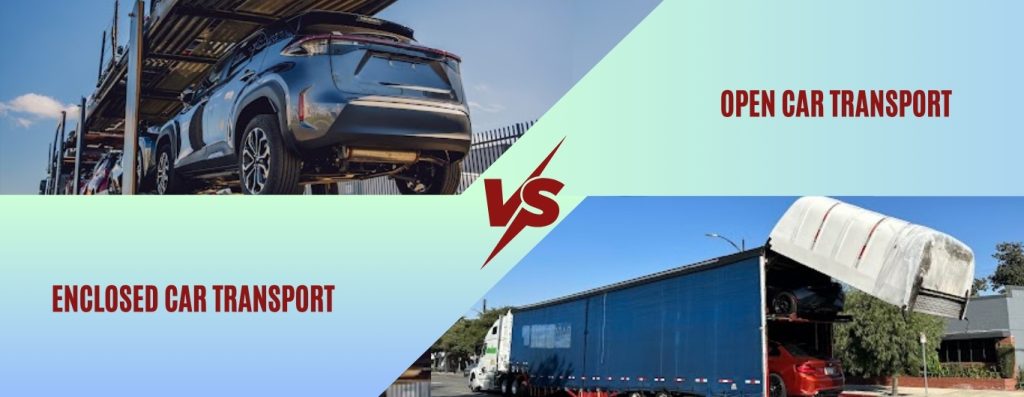
So, you have decided to move or travel and ship your car across the country. Good choice, but a tricky one! The question is should you go with open car transport or use enclosed car shipping?
At first glance, it might sound like a boring logistic question, but it’s actually one of the most important decisions you should make when moving a car. Choose wisely, and your car will arrive safe, clean and on time. Choose poorly… and you may be looking at a car that just went through a cross-country dust storm.
Let’s break it down in simple words. This is going to be all about open vs enclosed car shipping, what each type means, how much they cost, and which one you should choose.
What’s the Difference Between Open and Enclosed Car Shipping?
Before defining each pros and cons and doing breakdowns, let’s understand the basics.
Open car transport is exactly what it sounds like: your car rides on an open trailer with no roofs or sides. If you’ve ever driven behind a giant truck with multiple cars on it, then you’ve seen the open car transport in action. This is the most common way of transporting cars from state to state.
Enclosed car shipping, on the other hand, uses covered trailers for cars. It’s like putting your garage on wheels and moving it. Your car is fully protected from weather, roadside vandalism and curious onlookers.
To make things simple, here’s a quick comparison table we made for you:
| Feature | Open Transport | Enclosed Transport |
| Protection | Exposed to weather | Fully covered and shielded |
| Cost | Budget-friendly | Around 40 – 60% more expensive |
| Availability | Widely available | Fewer carriers, book early |
| Best for | Everyday vehicles | Luxury, exotic or collectible cars |
| Speed | Usually faster | Can take longer to schedule |
| Visibility | Everyone can see your car | Completely private |
So basically, open car transport is like flying in an economy class – practical and reliable. Having a car shipped in an enclosed trailer is like business class: much comfier, quiter and costs a little extra.
Open Car Transport and the Way It Works
Open car shipping is the industry standard for a reason: it gets the job done quickly and efficiently. Your car is loaded into a multi-level trailer that carries up to 10 vehicles at once. Each one is securely strapped down, and off they go.
It’s like carpooling for cars. They all share the same ride, which helps keep the prices down. And because these trailers are everywhere, finding a spot is usually quick and easy.
Pros and Cons of Open Car transport
Pros
One of the pros of open car shipping is the cost, as it is split among the number of cars being transported at the same time in the same truck. This is best if you have budget limitations and will save you a few hundred compared to closed shipping.
Another plus is the speed of delivery. Statistics show that almost 95% of cars transported used open trailers, which means you can find one if needed much quicker. However, during the peak seasons, you need to reconsider your timing.
Open car transport is also best for safety. Because open trailers let dealerships ship many new cars at once safely and cheaply, they are the best and most cost-effective way to deliver cars on a regular basis.
And finally, your car might get dusty or have a few bug splats on it along the way, but that’s usually the worst that happens. When it gets here, a quick wash will make it look great again. It’s like your car getting a little sunburn on the road.
Cons
The weather is the worst thing about open transport. Your car will be outside, exposed to the sun, wind, rain, etc. It’s not cool, but it’s not dangerous as well.
There is also a small chance of minor cosmetic damage. Road debris can leave small scratches, but it’s not common. It happens more often on long trips. That said, professional carriers do everything possible to lower this risk, so serious damage is rare.
Lastly, there is no privacy. People who drive by can see your car on the trailer. Most people don’t care, but if you’re shipping a rare or high-end model, you might want to be a little more careful. That’s where enclosed transport comes in.
| Category | Pros | Cons |
| Price | ✅ Cheapest shipping option | ❌ Less protected |
| Availability | ✅ Easy to find carriers nationwide | ❌ Peak season slots fill fast |
| Speed | ✅ Faster pickup and delivery | ❌ Slight delays on rare routes |
| Safety | ✅ Professionally secured vehicles | ❌ Exposed to weather and debris |
| Visibility | ✅ Easy loading and inspection | ❌ No privacy on the road |
| Best For | ✅ Everyday cars, short trips | ❌ Not ideal for luxury or vintage cars |
| After Delivery | ✅ Simple handoff process | ❌ May need a car wash after delivery |
Enclosed Car Shipping and the Way It Works
Enclosed car shipping means your car travels inside a fully covered trailer. These enclosed car carriers have firm walls, a roof and a floor that protect the car from the outside world.
In the case of enclosed car shipping, your car travels with two to five cars, and they are loaded using hydraulic lift gates and soft straps instead of metal chains. Those who drive enclosed trucks are usually experienced in dealing with high-value, rare and luxury cars.
Pros and Cons of Enclosed Car Transport
Pros
The main advantage of enclosed car shipping is the protection. Your car is completely closed to weather conditions like rain, snow or hail. It’s also safe from things that may sound minor but can ruin the paintwork of a luxury or collector car. When using covered transport for cars, your vehicle arrives in the same condition as when it was picked up.
Another advantage is safety and privacy. The car won’t catch the attention of thieves. This is why expensive cars or owners who want to keep things private often choose this type of transportation.
Also, drivers of enclosed car carriers are usually very well trained and know how to deal with rare or expensive cars. They use special tools such as padded interiors, soft tie-down straps, and lift gates to load the cars with low clearances. This keeps even the most fragile parts of the car safe. Some carriers even offer climate-controlled environments, which is nice if your car has sensitive paint, leather or wood details.
The insurance coverage is another big plus. Enclosed carriers often have higher cargo insurance limits, sometimes up to $1-3 million. This gives you peace of mind that your investment is fully protected in the rare event of an accident. When you add in real-time tracking and regular updates for drivers, it’s easy to see why enclosed shipping is thought to be the safest and most professional choice.
Finally, enclosed transport simply brings peace of mind. For people moving rare, valuable, or sentimental cars, knowing that their vehicle is getting “white-glove” treatment during every mile of the trip makes the extra cost worth it.
Cons
The main disadvantage of shipping a car in an enclosed trailer is the cost. Because the trailer carries fewer cars and needs special equipment, it usually costs 40-60% more than open transport. For example, the same trip might cost $800 for open shipping and $1,200 or more for enclosed shipping. This is a good idea for rare or expensive cars, but not so much for regular cars.
There is also the problem of availability. It may take longer to find an enclosed carrier because there are not as many on the road, especially when it’s busy. You may have to wait a little longer if you need to pick up the car quickly or on a certain date. Also, enclosed shipping can take longer because each truck carries fewer cars and has to be more careful when loading and unloading.
In the end, enclosed transport may be too much for most regular cars. Millions of cars are moved safely every year by open carriers, so the only time it makes sense to pay extra is if your car’s cost is very high or it is important to you personally.
| Type | Pros | Cons |
| Protection | ✅ Fully protected from road hazards. | ❌ Costs more than open shipping |
| Security | ✅ Hidden from view, safer from theft or attention | ❌ Limited carrier availability |
| Handling | ✅ Experienced drivers with soft straps and lift gates | ❌ Slightly slower loading and delivery |
| Insurance | ✅ Higher cargo insurance for valuable vehicles | ❌ Higher overall service price |
| Best For | ✅ Luxury or classic car shipping | ❌ Not needed for standard everyday cars |
Open vs Enclosed Car Shipping: Cost Comparison
Enclosed car transport costs more than open auto transport, and here is why:
- Fuel costs are higher, as enclosed carriers are heavier, and they have less aerodynamics; thus, they spend more.
- Open carriers ship up to 10 cars at the same time, while enclosed carriers’ maximum amount is from 3 to 5.
- Enclosed carriers use lift gates, soft straps and climate control, which adds value (and cost).
- There are also insurance-related questions, as enclosed carriers often carry coverage up to $1M+.
Except for the abovementioned factors, there are also other things affecting the final price, which are:
- Distance: Longer trips cost more overall but less per mile.
- Car size and weight: big cars are heavier and require more space and fuel.
- Pickup/delivery locations: Rural areas cost more than big cities because carriers have to drive extra miles off-route.
- Season: Demand is higher in the summer and winter (fall/spring).
- Timing: Faster delivery costs more.
- Condition: If your car won’t start, the fee may go up if you need extra loading equipment.
Safety and Insurance Details
Both open vs closed transports are safe, but insurance coverage is different.
For open car transport, insurance usually covers from $100,000 to $150,000 per car. For the enclosed type, coverage can reach up to $3 million.
Delivery Time: Which Is Faster
When you’re in a hurry, the open type of shipment usually wins because there are more open carriers on the road and your car can be picked up and delivered faster. Enclosed car shipping may take a few extra days because there are fewer trucks available and they make fewer stops.
However, enclosed trailers sometimes move faster once the trip begins, as they make fewer deliveries en route. So if you are lucky, your luxury ride might still arrive ahead of time, and why not, clean!
Deciding Between Open vs Enclosed Car Shipping
If you’re still not sure which option fits you best, that’s completely okay. Choosing between open vs enclosed car shipping is not always an easy thing to do, especially if it’s the first time you ship a car. Both methods are safe and reliable, but they fulfill completely different needs.
The correct choice depends on what kind of car you’re shipping, how much protection you want and what your budget is. If your main goal is to save money and get your car delivery quickly, open transport usually is the best choice. But if your car is rare, expensive, newly bought (and never used), or just means a lot to you, enclosed shipping can be worth every penny.
So:
Choose open car transport if:
- You’re shipping a standard sedan or an SUV.
- You’re on a tight budget.
- You want a quick pickup and delivery.
- A little dirt or rain doesn’t scare you.
Choose enclosed car shipping if:
- You have a vintage, exotic or luxury car.
- You’re moving a long route or through bad weather conditions.
- You care about how your car looks and how safe it is.
Both open and enclosed car shipping are safe and proven ways to transport your car. However, they each meet different needs. The best choice depends on how much you care about your car and what you want to do on the trip. Open shipping is a good choice if you want to save money and move a regular car. But if your car is very expensive, enclosed transport is the safest way to choose.
No matter which type you choose, working with a trusted auto carrier makes it all worth it. You can relax knowing that a trustworthy company will keep your car safe, insured and on time.