
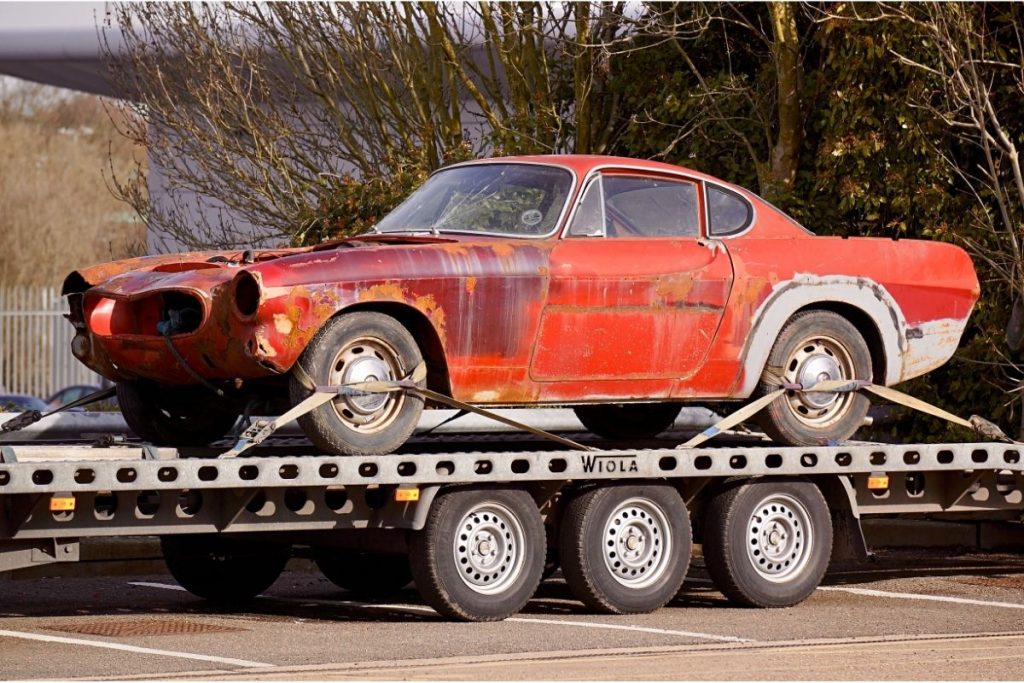
emetimes a car just won’t start. The battery’s maybe dead, the engine broke, it’s too old or it was in an accident. But what if you need to move it to another city or state, let’s say for a checkup? You can’t drive it yourself, so what to do?
That’s why non-running car transport was invented. It’s a special service for cars that can’t move on their own. Professional transport companies use special trucks and tools to load and move those cars from your mentioned point to their destination.
Our article will explain how it works, how much it costs and what you should do to get it ready for shipping.
What Is Non-Running Car Transport?
Non-running car transport is the process of moving a car that doesn’t work and has issues or you can’t drive safely. The issues may be small, like a dead battery or big ones like broken wheels or no brakes. Here are the common types of inoperable cars:
| Type | What it means | How it’s loaded |
| Working car | Starts and drives | Driven onto the trailer |
| Rolling non-runner | Doesn’t start but can roll and steer | Pulled by a hook |
| Non-rolling car | Can’t roll, steer or brake | Lifted by a crane or liftgate |
Non-Running Car Characteristics
- The engine does not start even with a jump start.
- It cannot move on its own, so it needs to be pushed, pulled or lifted.
- There is no battery or it is dead.
- It has flat tires, or they are damaged or the wheels are missing.
- Brakes are stuck or in non-working condition.
- The steering is not working or it’s hard to control.
- Even when on neutral, it cannot roll.
- There are no keys (the steering wheel may be locked).
- It has accident damages and is not compliant with driving.
- There are major mechanical issues, i.e. engine or a transmission failure.
Those are the main important details that make the car non-running and an indication that you need special equipment for loading the car onto a carrier.
Knowing and understanding the exact conditions will help you get the right price while shipping, avoid surprise fees and make sure the pickup goes smoothly.
Why Non-Running Cars Need Special Handling
Non-running cars need more attention during transport. They cannot be driven up the ramp, so you must use special tools, spend extra time on it and sometimes need more than you to load it. That’s why it requires more work than shipping a regular car.
If the car can roll and steer, the process will be much easier. You would attach the cable from the winch to a safe point on the car and pull it up slowly. In case of locked, missing or too damaged wheels, the car will need a lift.
Some places, like auctions or auto yards, also use forklifts because many cars there have serious damages and cannot roll at all. In this kind of situation, the carrier needs to be prepared for a smooth pickup and the car to be moved safely.
This is why transport companies always ask about the car condition before assigning a truck. Even one minor detail can change what equipment is needed. A car that rolls but has a locked steering wheel may require a forklift because it cannot be directed onto the trailer. Another one with flat tires may need wheel dollies. A vehicle with no brakes may need blocks and extra care to prevent it from going backward.
Informing about the correct condition will help you get the right truck and tools and avoid delays and unexpected fees.
The Costs Of Non-Running Car Shipping
Shipping a non-running car does not usually cost more than shipping a car in normal condition. Of course there are several factors influencing the price, but generally, the difference is minimal. Here are the key factors affecting the price.
Condition and loading equipment
If the car rolls, steers and the brakes work, it means it’s easier to load and it’ll cost less. But if you have the opposite picture, you’ll need special equipment (as already said before), such as wheel dollies, liftgates, etc. Transport companies cite this as a reason shipping non-running cars needs “special equipment and handling” and add it to the bill.
Distance and route
Longer distances cost more; that’s not a secret. Also, there’s no secret in the cost per mile decrease along with the distance. For example, standard shipping can cost $0.40 to $2.00 per mile depending on many variables.
Size and weight
Bigger vehicles like SUVs and trucks, cost more because they take up more space and add to the cost It tends to go up even more when the car isn’t running because it has to be handled more.
Open transport (cars on open trailers) is less expensive and offers less protection. Enclosed transport (cars inside a covered trailer) is pricier yet better for high-end cars.
Pickup and Delivery Conditions
Longer locations, tight driveways or special access issues affect the cost negatively because loading trucks may need extra maneuvering or equipment. Also, if the non-running car is at an auto yard, they may add additional waiting or equipment fees.
Seasonal demand and timing
Shipping rates can vary based on the demand (moving season, holidays) and its condition and weather along the route. In the peak seasons costs may go higher, so if you plan to move your car, plan it ahead.
Typical Price Ranges
While prices vary widely, here are some rough indicators:
- For standard running cars, the average is nearly $650 for shorter drives.
- For non-running cars, many carriers quote higher. The average cost to ship a non-running car is between $650 and $1,200.
A company example: shipping a non-running car from California to Florida might cost $1,500 to $2,300.
Always let the company know about your car’s condition so they can give you an accurate quote. If you don’t, they might cancel the pickup or charge you more later.
Tips to Control the Cost
- Be accurate about the car’s condition.
- Choose open transport if your car’s condition allows it.
- Use major pickup/delivery locations to avoid extra fees.
- Book early and be flexible with dates.
- Compare quotes from various companies and check that the non-running status is included.
Preparing your Non-Running Car for Shipping
Before sending the car for transport, there’s a little preparation that goes along the way. Although the car is not running, you can still do things that will help you load it safely. Following the right steps, you’ll give the shipping company what they need: the right tools for lifting, the correct truck and no additional surprises.
To you, this will mean getting your car on time and paying exactly what you need to pay. No extra surprises.
Easy Steps You Should Follow to Get Your Car Ready Before Pickup.
- Wash your car and write down any damage: Take pictures of the car from all sides after you wash it to prove its condition later if needed.
- Take out all of your personal things: Carriers usually don’t cover personal things and things that aren’t tied down can move around during transport.
- If your car has loose trim, antennas or other parts that can be taken off, do so or tape them down.
- Check the wheels and tire pressure. If the car rolls, pump up the tires if you can. Let the carrier know ahead of time if you don’t have any wheels or tires.
- Check for any major fluid leaks: An oil, coolant or brake fluid leak can cause problems. Fix it or at least let the carrier know.
- Give the keys and unlock the steering. The driver may still need to steer or shift the gear into neutral even if the engine won’t start.
- Tell the carrier exactly what is wrong: Be honest about how well the car rolls, turns or stops. This helps the transporter bring the right equipment.
- If the carrier asks, take off the license plates. Some companies ask you to take off or cover the plates, so check ahead.
- Keep a copy of the Bill of Lading. Make sure to keep copies of the signed documents and pictures from the pickup and delivery.
Following these steps will help the transportation company move your car without any delays or additional costs.
Sometimes a car won’t just start. An engine failure, a dead battery, an old car or an accident on the road, and it will be stuck. But what if you need to move it to another city or state for a repair? You can’t drive it, so what’s next?
This is where non-running car transport helps. It’s a service made for cars that can’t move by themselves. Transport companies use special trucks and equipment to load, secure and move cars that don’t run.